 December 07, 2025
 Scientific
The study demonstrates that by precisely controlling synthesis parameters such as melting temperature, reactant ratios, and crystallinity level, it is possible to convert hazardous industrial residues into a cost-effective, high-capacity adsorbent suitable for large-scale applications. This approach not only enables the recycling of hazardous waste, but also opens a new pathway for producing sustainable industrial adsorbents.
Industrial pollution has intensified over recent decades, and conventional wastewater treatment systems often struggle to cope with effluents from heavy industries. Zinc production plants, in particular, generate significant volumes of wastewater with high concentrations of heavy metals – substances that are toxic to the environment and can contaminate soil and groundwater for many years. Under these conditions, the development of advanced adsorbent materials that are both industrially viable and economically affordable has become an urgent priority. In this context, the Sahand research team successfully used a completely unconventional feedstock – lubricant-contaminated clay-based waste – to produce an effective adsorbent for heavy metal removal.
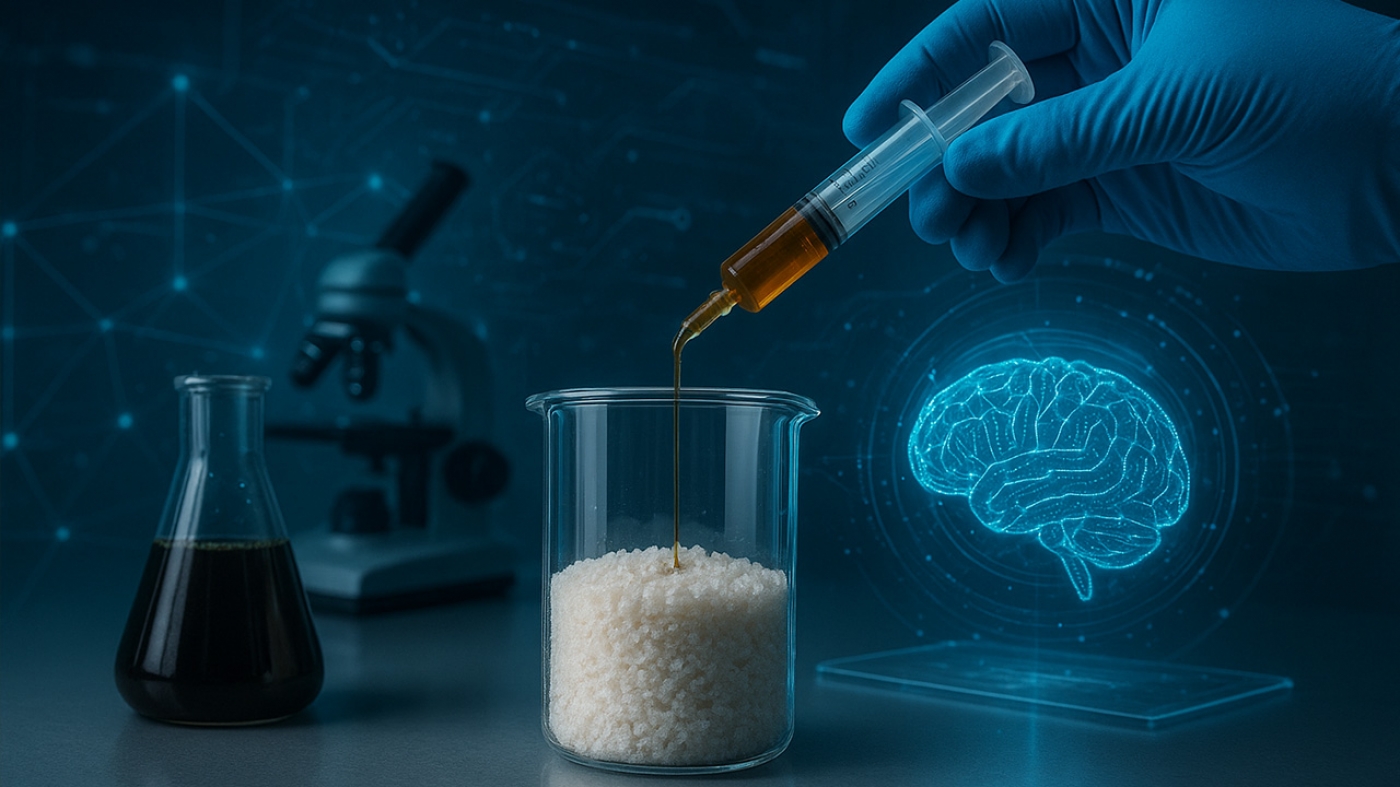
The central idea of the project was based on a powerful paradox: transforming a hazardous waste material into a valuable industrial adsorbent. Clay-rich residues contaminated with spent lubricant oil are typically landfilled, where they can take decades to degrade. Using a novel thermal process, the researchers showed that these residues can be converted into zeolite 4A, a well-known material widely used as an ion exchanger, water softener, and heavy metal adsorbent.
The challenge, however, was not only to eliminate the toxic organic compounds in the waste, but also to convert the material into a suitable precursor for zeolite formation. In other words, the oily residues had to be simultaneously decontaminated and activated. This was achieved through a high-temperature melting step, after which the researchers carefully controlled the chemical composition and the ageing and crystallization times to obtain the desired zeolite 4A structure.
They found that a crystallinity level of around 32% provided the optimal balance for maximum adsorption capacity for metal ions such as Zn²⁺, Ni²⁺ and Cd²⁺. Lower crystallinity led to an underdeveloped structure with poor performance, while excessively high crystallinity reduced the number of accessible active sites. This optimum crystallinity was achieved when both the ageing and crystallization stages were maintained at approximately three hours.
Experimental results showed that samples synthesized at 900 °C exhibited the best adsorption performance. At this temperature, a porous network with an average pore size of 48 nanometers was formed, providing sufficient channels for heavy metal ions to diffuse into the adsorbent structure. The researchers also reported that the surface charge of the adsorbent, measured as zeta potential, should be around −43 mV to maximize electrostatic attraction and adsorption of positively charged metal ions.
The maximum adsorption capacity for zinc ions – 143 mg/g – is a remarkable value for a zeolite produced from industrial waste. The study further revealed that by fine-tuning the initial reactant ratios, particularly the sodium carbonate-to-waste ratio (1.67) and aluminum hydroxide content (0.67), it is possible to produce a highly efficient adsorbent that not only creates added value, but also prevents hazardous residues from entering the environment.
The primary application of this zeolite is the treatment of wastewater discharged from zinc production units. Such effluents typically contain high levels of zinc and other heavy metals which, if not properly treated, can flow into rivers and agricultural water sources. Tests conducted on real industrial wastewater showed that the synthesized zeolite 4A was capable of removing over 90% of the metal ions present.
Despite these promising results, the researchers emphasize that further work is needed before the technology can be fully implemented at industrial scale. In particular, the performance of the zeolite in dynamic systems, such as fixed-bed columns, must be thoroughly evaluated. Although residual oil in the original waste confers plasticity, making it possible to shape the material into granules, pellets, or porous blocks, additional studies are required to optimize the design and fabrication of such structured adsorbents.
The next stage of research will therefore focus on developing shaped adsorbent bodies suitable for use in real reactors, capable of withstanding continuous flow and large volumes of industrial effluent while maintaining mechanical and chemical stability. According to the research team, this could pave the way for a new generation of industrial treatment systems that are both more affordable and more environmentally friendly.
The Sahand University of Technology project demonstrates not only that a hazardous industrial waste can be turned into a valuable resource, but also that it offers a blueprint for cleaner technologies in the metals industry, both in Iran and globally. Recycling contaminated residues and converting them into advanced adsorbents can underpin a sustainable economic model for industry while significantly reducing the environmental burden of industrial pollution.
 Comments
 114331

 0
0  Printable