
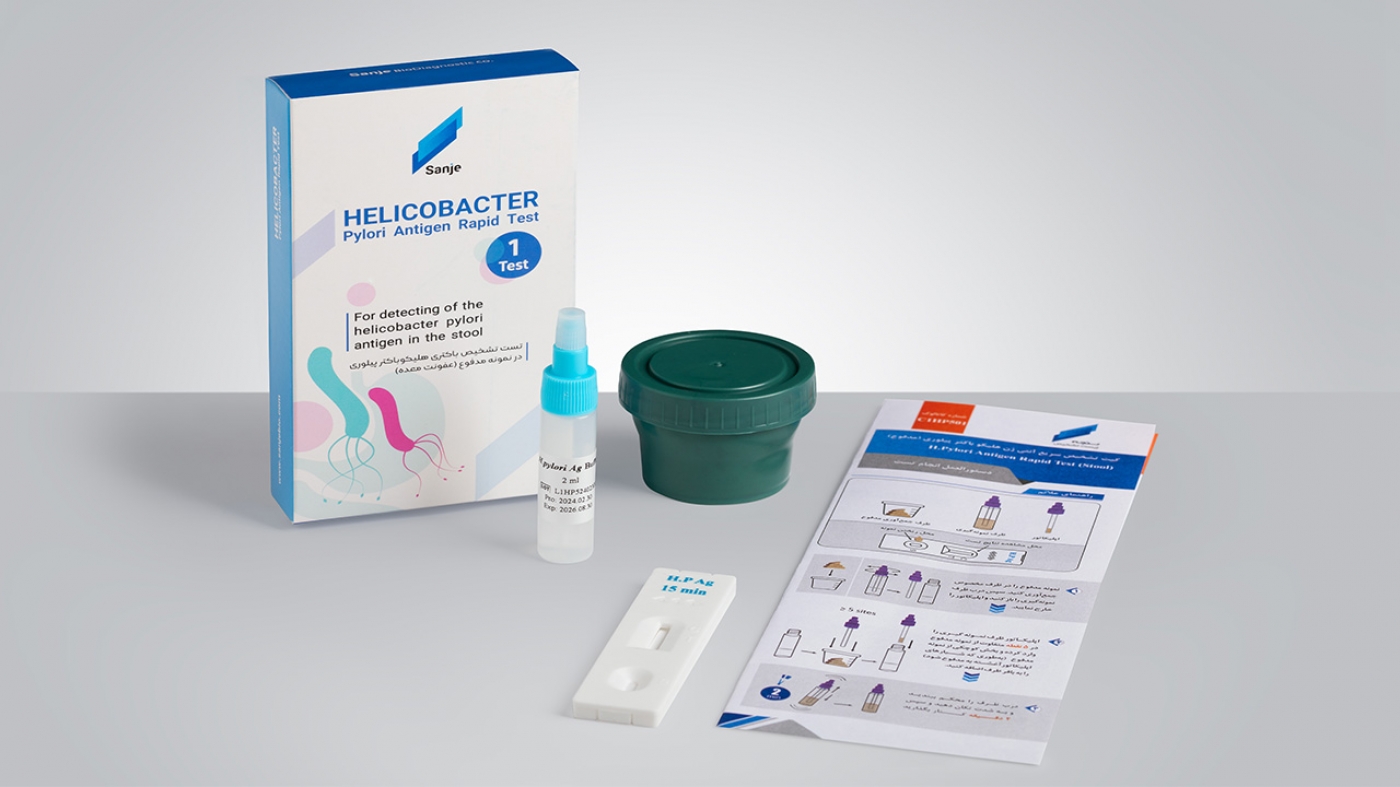
An Iranian knowledge-based company has developed a nano-based rapid diagnostic kit for the early detection of Helicobacter pylori, the bacterium recognized as the leading preventable cause of gastric ulcers and stomach cancer. Utilizing lateral flow assay (LFA) technology, the newly developed kit enables fast, accurate, and non-invasive detection of H. pylori antigens in human stool samples, providing a practical solution for early diagnosis and disease prevention.
 June 28, 2026
 Commercialization
Helicobacter pylori is one of the most widespread bacterial infections worldwide. According to international estimates, approximately 44% of the global population is infected with the bacterium, which is considered a major risk factor for chronic gastritis, peptic ulcers, and gastric cancer. Since H. pylori infection can be effectively treated with appropriate antimicrobial therapy, early diagnosis remains one of the most important strategies for reducing the burden of gastrointestinal diseases.
Developed by the Iranian knowledge-based company Zist Tashkhis Sanjeh, the rapid diagnostic kit employs antibody-based detection technology to identify H. pylori surface antigens with high sensitivity and specificity. Unlike conventional diagnostic methods that often require specialized laboratory infrastructure or invasive procedures, the LFA-based kit delivers rapid results while offering ease of use, lower testing costs, and minimal equipment requirements.
The kit is designed for use across a wide range of healthcare settings, including clinical laboratories, hospitals, medical centers, gastroenterology clinics, pharmacies, and home-based screening applications. Its portability and user-friendly format expand access to diagnostic services, particularly in regions with limited laboratory resources.
Healthcare experts emphasize that timely detection of H. pylori infection plays a critical role in preventing disease progression. Early diagnosis followed by appropriate treatment can significantly reduce the risk of developing severe gastric disorders, including stomach cancer. Consequently, rapid diagnostic technologies are increasingly recognized as valuable tools for large-scale screening and preventive healthcare programs.
In addition to this product, Zist Tashkhis Sanjeh develops a portfolio of rapid diagnostic kits based on lateral flow assay technology for various medical applications. The platform offers fast, affordable, and reliable diagnostic solutions that are particularly suitable for point-of-care testing, emergency situations, and resource-limited healthcare environments.
According to the company, all products are manufactured in compliance with internationally recognized quality management and medical device standards. The development of indigenous nano-enabled diagnostic technologies is expected to strengthen domestic manufacturing capabilities, reduce dependence on imported medical products, improve access to early diagnostic services, and contribute to lowering healthcare costs.
As gastrointestinal diseases continue to pose significant public health challenges worldwide, innovations such as rapid nano-based diagnostic kits have the potential to enhance disease screening, support early intervention, and improve patient outcomes through timely diagnosis and treatment.
 Comments

 130557
  128762
 0
0  Printable